Reopening Hormuz: Mine warfare, coalitions, and Europe’s naval bandwidth
DefenseOne argues reopening Hormuz hinges on mine countermeasures and a coalition built through existing CMF frameworks, with clear implications for European naval readiness and niche enabler capabilities.

Key facts
- DefenseOne says traffic through the Strait of Hormuz has been severely reduced after U.S.-Israeli airstrikes on Iran, with global price impacts.
- The piece argues Washington’s attempt to press Europe into rapid maritime deployment was rushed and misaligned with European naval readiness cycles.
- It proposes using Combined Maritime Forces frameworks and prioritising mine countermeasures, with a core US-UK-Ukraine contribution and wider European niche support.
3 minute read
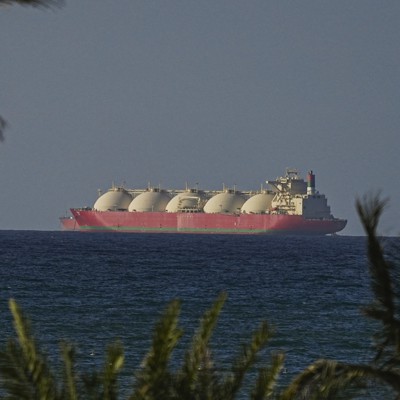
The article assesses the Strait of Hormuz disruption as the standout geopolitical after-effect of recent U.S.-Israeli strikes on Iran, noting that while the strait’s exact operational status is unclear, throughput has been sharply reduced and price shocks propagate globally regardless of U.S. import exposure. For European governments, the immediate implication is that energy-market instability and supply-chain volatility can be triggered by relatively short, high-intensity maritime denial episodes, placing a premium on rapid maritime security responses even when the initiating crisis is politically contentious in Europe.
It argues the Trump administration did not anticipate Tehran’s willingness to close the waterway and then attempted to compel European allies into a maritime deployment without prior consultation. The author judges this unrealistic given European navies’ readiness cycles and existing commitments, and warns that U.S. political friction—explicitly including rhetoric about Greenland—has degraded public and elite support in Europe for high-risk deployments. Nonetheless, the piece concludes that European frustration does not alter the strategic requirement: Hormuz must be kept open for the global economy to function, and a ceasefire creates a narrow window to organise a durable deterrent posture.
Operationally, the recommendation is to build any new effort within established constructs, specifically the U.S.-led Combined Maritime Forces headquartered in Bahrain and its task forces focused on Gulf security and related maritime missions. This is presented as a practical pathway to faster force generation and coherent command arrangements compared with ad hoc coalitions.
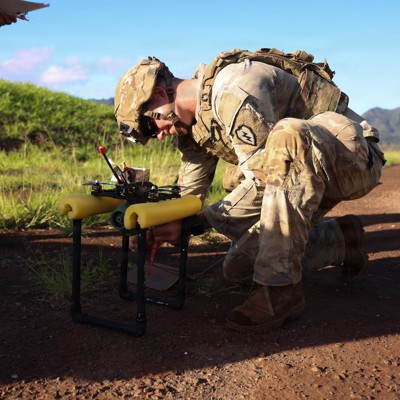
The author emphasises mine warfare as a central capability set, proposing a core grouping of the United States, the United Kingdom, and Ukraine. The UK is cited for deep Gulf experience and specialised mine countermeasure capacity; Ukraine is cited for recent Black Sea experience in mine countermeasures and unmanned naval systems, plus political willingness to contribute. The piece notes Ukraine’s two British-built Sandown-class minehunters with trained crews currently based in the UK due to constraints on entering the Black Sea, implying potential availability for out-of-area deployment with U.S./UK support.
For Europe, the notable procurement and force-planning implication is that niche enablers—mine countermeasures, EOD teams, and unmanned maritime systems—may deliver disproportionate strategic effect in chokepoint crises. The article also points to smaller European contributors such as the Baltic states’ mine countermeasure expertise and suggests NATO’s standing mine countermeasure group as an option, potentially structured via partnership mechanisms like the Istanbul Cooperation Initiative given the Gulf’s location outside NATO’s traditional area.
Source: Defense One