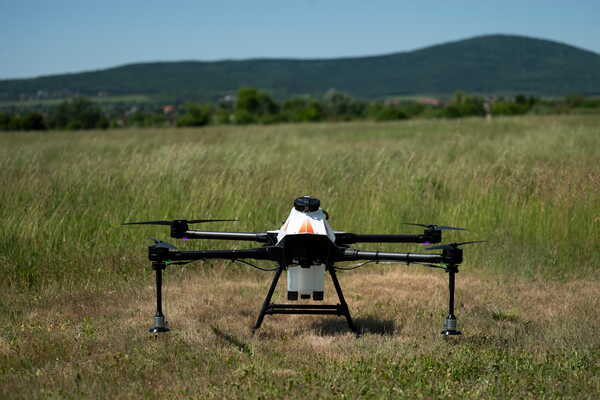
European consortium defines 'trusted drone' criteria to secure critical operations
A Deloitte-led consortium held an initial workshop to outline cybersecurity and supply-chain requirements for a European Trusted Drone Label, targeting public-sector procurement within the EU Drone Strategy 2.0 framework.


A Deloitte-led consortium held an initial workshop to outline cybersecurity and supply-chain requirements for a European Trusted Drone Label, targeting public-sector procurement within the EU Drone Strategy 2.0 framework.
Key facts
- Consortium led by Deloitte convened experts to draft criteria for a European Trusted Drone Label under EU Drone Strategy 2.0
- Proposed criteria address secure design, encrypted comms, GNSS-jamming resilience, and EU-based data handling
- Europe imports over 60% of drone components; China controls ~90% of rare-earth magnet production critical to motors
The European Commission is formalising a trust framework for drones used in sensitive and critical applications across the EU. A consortium led by Deloitte held an initial expert workshop in early February 2026 to establish baseline criteria for what will become the European Trusted Drone Label — a certification intended to clarify which platforms are defensible against malicious interference and aligned with European cybersecurity and supply-chain standards. The initiative is part of Drone Strategy 2.0, which aims to reduce Europe's reliance on non-European manufacturers, particularly Chinese suppliers.
For Europe, the label addresses a structural vulnerability. The EU still imports more than 60 percent of its drone components, with China accounting for approximately 90 percent of global rare-earth permanent magnet production — a critical input for drone motors. Key software platforms and cloud infrastructure for industrial drones remain dominated by non-European actors, and Europe represents only a marginal share of global battery cell production. The label is designed not only as a cybersecurity filter but as a mechanism to reshape procurement incentives toward European or allied suppliers. At a later stage, it could be linked directly to public tender requirements, making trust a decisive factor in government contracts for emergency services, law enforcement, and critical infrastructure inspection.
The likely outcome is a trade-off similar to the US Blue sUAS programme: higher assurance, higher cost, lower capability. European 'trusted drones' may offer demonstrable resilience against signal spoofing and unauthorised takeover, but will probably be more expensive and technologically less mature than commercial alternatives currently deployed by professional operators. The real test will be whether European governments are willing to absorb that cost premium — and whether the label can scale beyond niche use-cases without fragmenting the broader European drone market. If the label becomes a de facto procurement requirement without sufficient industrial capacity to meet demand, it risks creating a bottleneck rather than a competitive advantage.
Source: Dronewatch.eu