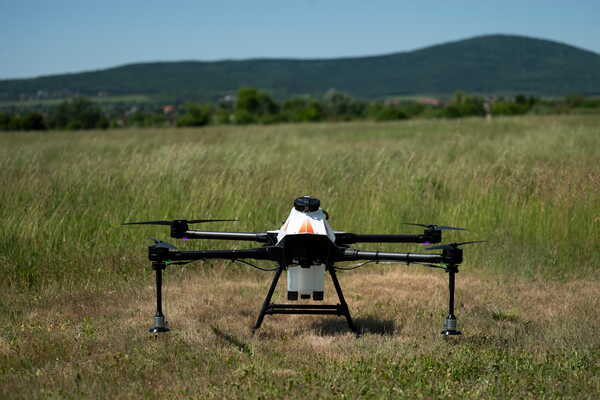
Russian Disinformation Surge After Drone Violation in Poland
Following a drone incursion into Polish airspace attributed to Russia, pro-Kremlin information operations have intensified. Experts highlight that these efforts aim to manipulate narratives and destabilize Poland, undermining NATO's support for Ukraine.


Key facts
- Russian drones violated Polish airspace last month.
- Pro-Kremlin teams quickly launched disinformation campaigns.
- The aim is to destabilize Poland and weaken NATO support for Ukraine.
- Experts warn of hybrid operations designed to manipulate narratives.
2 minute read
The recent drone incursion paired with an immediate online push is a textbook hybrid probe. The critical vulnerability is the gap between detection and attribution. Allies should treat those hours as contested space — with named leads, pre-approved release thresholds, and rehearsed evidence packs. These packs should combine radar plots, ISR imagery, authenticated timestamps, and chain-of-custody documentation.
Pre-bunking of likely narratives must launch within hours, using language-specific products and trusted national voices. Legal and diplomatic lines should be scripted in advance to enable fast, factual messaging that does not compromise sensitive sources — an approach consistent with lessons drawn from Europe’s recent drone-related hybrid incidents.
Hard defence must close the low-altitude, low-speed layer. Border states need dense counter-UAS coverage around frontiers, energy nodes, and logistics corridors, fully integrated with national air-defence networks and NATO Air Policing. A single, near-real-time recognised air picture should fuse military sensors, border-guard radars, civil-aviation feeds, and commercial space data where available — a capability gap also highlighted in Denmark’s counter-UAS lessons.
Cross-border procedures for detection, classification, and engagement require shared data standards, common identification rules, and clear alerting pathways. Authorities for hand-off and, where lawful, hot pursuit of low-slow targets should be clarified to reduce delay and legal ambiguity. Similar integration logic underpins the EU’s 2027 anti-drone system initiative and European Defence Readiness Roadmap 2030.
Strategic communications must now sit inside air defence. Standing counter-disinformation cells should coordinate attribution, release verified timelines and artefacts quickly, and keep open datasets available for scrutiny. The EU should enforce the Digital Services Act with language-specific measures against coordinated inauthentic behaviour in Polish, Russian, and Ukrainian spaces. Sanctions, ad-tech limits, and payment friction can curb reach and funding — a key pillar in hybrid resilience that complements hard-kill measures detailed in Europe’s rearmament framework.
Governance and interoperability will decide outcomes. Article 4 consultations and predefined hand-offs can compress decisions and bolster deterrence. The next crisis will reward those who fuse sensors, policy, and narrative at speed — translating detection into attribution, and attribution into coordinated response.
You might also like....
 Mr. T (Curator)
 Mr. T (Curator)
 Mr. T (Curator)