
Russia’s ‘post-hybrid’ escalation tests NATO airspace and Western red lines
Russia’s drone incursions and alleged sabotage plots are portrayed as more overt than “hybrid war,” pushing Europe toward tighter C-UAS defenses and looser engagement rules.

Key facts
- Commentary cites a September drone strike affecting a train route from Kyiv toward Poland, underscoring elevated risk to Western VIP movements and cross-border transport.
- An explosive-carrying drone allegedly struck an aircraft wing at Leipzig airport, described as a NATO-related logistics hub; the explosive reportedly failed due to a faulty detonator.
- Poland is reported to be easing engagement rules to allow radar-based identification for shooting down drones, reflecting faster European adaptation than the United States.
3 minute read
The commentary frames recent Russian activity not as “hybrid war” but as a transition toward overt external operations conducted below the threshold of declared conflict. As evidence, it recounts a September incident in which passengers were ordered off a train travelling from Kyiv toward Poland shortly before a Russian drone strike hit the train area, after drones were heard overhead. The episode is presented as illustrative of Moscow’s increasing tolerance for operations that could endanger senior Western figures, even if the intended target was different or the strike was imprecise.
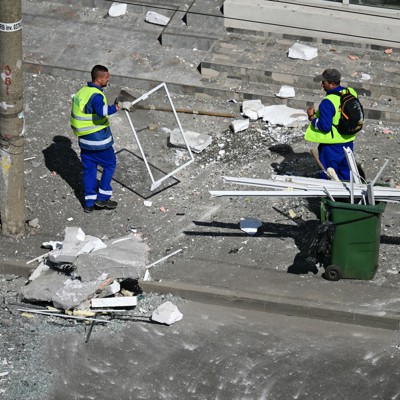
For Europe, the most operationally consequential claims relate to airspace and rear-area security. The author cites an August incident in which an explosive-carrying drone struck the wing of a Ukrainian cargo aircraft at Leipzig airport in Germany, described as a logistics hub supporting NATO airlift to the eastern flank; the device reportedly failed to detonate due to a faulty detonator. The piece further references external tracking that has recorded more than 100 confirmed or suspected Russian UAV and aircraft incursions over Europe, including an explosive-laden drone shot down over Lithuania and a drone strike that hit an apartment building in Romania near the Ukrainian border. The implied European lesson is that the distinction between front-line and rear-area is eroding: critical nodes for movement, sustainment, and political signaling are increasingly within the envelope of Russian coercive action, creating both force-protection and escalation-management challenges for NATO governments.
The author argues Moscow’s cost-benefit calculus is shifting as the war in Ukraine persists and economic pressure on Russia grows: raising the perceived costs of Western support is treated as more valuable than maintaining plausible (or even implausible) deniability. That assessment matters for European procurement and posture decisions because it suggests a greater premium on counter-UAS architectures, persistent low-altitude surveillance, rapid engagement authorities, and resilience of airlift and rail logistics rather than a narrow focus on battlefield systems for Ukraine alone.
Europe is portrayed as moving faster than Washington in adjusting operational responses. Poland is cited as easing its rules so fighter pilots may down a drone based on radar “positive identification” without visual confirmation, signaling a shift toward earlier engagement to reduce risk. The article contrasts this with the United States, which it argues still treats the threat as comparatively latent despite NATO obligations and recent US Justice Department indictments alleging Russian intelligence-linked plots to recruit individuals in the United States to surveil and potentially kill or abduct critics of Russia’s war. For Europe, the strategic implication is that uneven threat framing and mixed signaling from the US leadership could complicate alliance deterrence messaging; conversely, Europe’s front-line experience is driving a more permissive and kinetic defensive posture that may set de facto precedents for NATO rules of engagement in peacetime.
Source: Defense One


