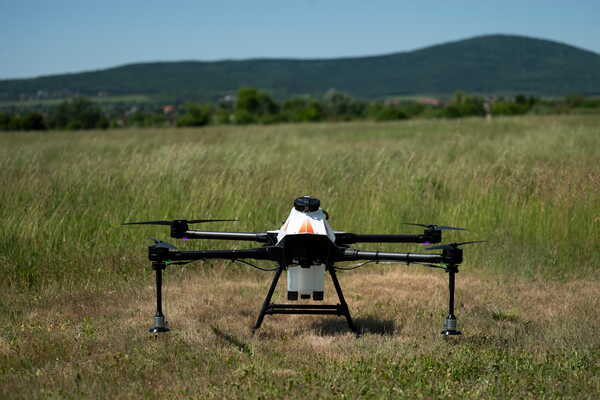
Spain Disrupts Drone Network Smuggling Cannabis from Morocco
Spanish authorities have dismantled a sophisticated drone network used for smuggling cannabis from Morocco. This operation highlights the growing use of unmanned aerial systems (UAS) in illicit activities and the need for enhanced counter-drone measures in Europe.


Key facts
- Spanish authorities dismantled a drone network smuggling cannabis from Morocco.
- The drones were capable of carrying significant payloads, evading border controls.
- This operation highlights the need for improved counter-drone measures in Europe.
2 minute read
The recent takedown of a cross-border smuggling network highlights a resilient and evolving threat on Europe’s southern flank. It makes tactical sense for traffickers to use these small unmanned aircraft; the sea hop from North Africa to Spain is short, the drones are quiet, and the airframes are cheap enough to be expendable. Even if they carry small amounts of contraband, the operators can turn a profit simply by keeping a high tempo of flights and spreading their risk across multiple launch sites. This fundamentally shifts the job of border enforcement. We can no longer rely solely on static checkpoints on the ground; the focus has to move toward persistent scanning and rapid reaction in the low-altitude airspace.
Policymakers need to look beyond individual seizures and tackle the systemic issue. While frameworks like U-space and Remote ID are excellent for managing compliant drone traffic, illicit operators will simply ignore them. To catch the rule-breakers, border forces need a layered defense architecture at coasts, ports, and logistics hubs. This means combining radio frequency detection, passive radar, and acoustic sensors into a single, shared operating picture. However, the technology is only useful if agents have the legal backing to use it. Right now, the authority to jam or spoof signals is inconsistent across Europe. We need harmonized rules of engagement that clarify exactly when and how these countermeasures can be used in civilian airspace without endangering the public.
Disrupting these networks also requires targeting their logistics and supply chains, not just the drones in the air. Intelligence agencies like Europol and Frontex should be expanding their watchlists to track the purchase of heavy-lift platforms, high-capacity batteries, and other critical components, allowing for interdiction before the drones even take flight. On the tactical side, procurement should focus on tools suitable for urban environments—like net capture systems or precision electronic warfare—paired with police drones that can pursue suspects and gather evidence.
Ultimately, while industry measures like serial numbers and hard geofencing can raise the cost of doing business for smugglers, they won’t remove the threat entirely. Joint training under EU and NATO umbrellas will help standardize how nations respond, but Europe must expect to scale up its maritime surveillance and counter-drone capabilities significantly. As these unmanned systems continue to reshape illicit logistics, securing the "grey zone" of low-altitude airspace is going to become a permanent requirement for border security.