SSU Launches Enhanced Sea Baby Maritime Drones with Advanced Armaments
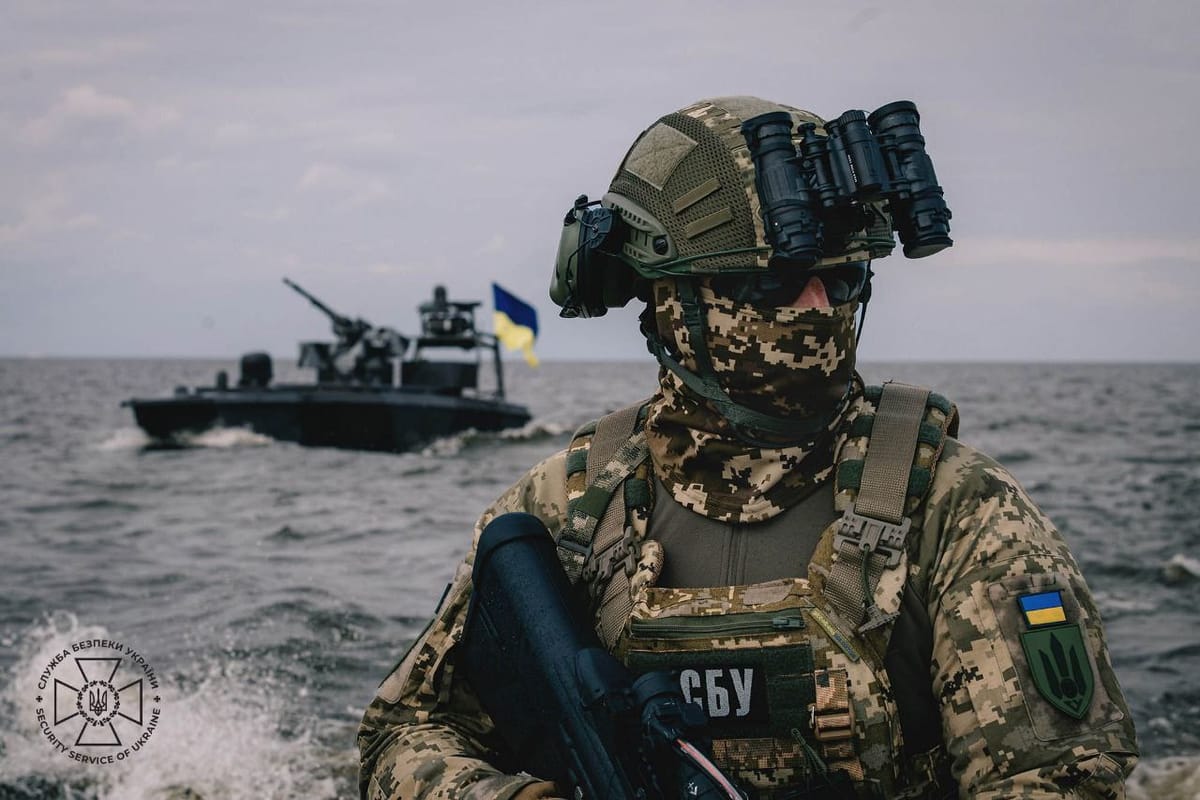
The State Special Communications Service of Ukraine (SSU) has revealed upgraded Sea Baby maritime drones, now equipped with advanced weaponry. This development aims to bolster Ukraine's naval capabilities amid ongoing conflicts.

Key facts
- Upgraded Sea Baby drones feature advanced weaponry for improved combat capabilities.
- Enhancements aim to strengthen Ukraine's maritime defense amid ongoing conflicts.
- The initiative reflects Ukraine's commitment to modernizing its defense technologies.
2 minute read
Ukraine’s upgraded Sea Baby uncrewed surface vessels signal a step change in Black Sea deterrence. By shifting from one way explosive boats to modular, armed platforms, Kyiv can impose sea denial at lower cost, stress Russian naval operations, and keep pressure on logistics nodes without exposing scarce crewed assets.
The stated range beyond 1,500 km and payload up to 2,000 kg extend reach against infrastructure such as the Kerch Strait bridge approaches and ports supporting the war effort. That depth complicates Russian air and coastal defenses, forces dispersal, and demands persistent patrols, raising the defender’s cost per engagement.
Weapon options matter. A gyro stabilized machine gun with automatic target recognition provides terminal self protection and the ability to disrupt interceptors. A 10 round Grad launcher adds coastal suppression and harassment, enabling swarming tactics and coordinated fires from multiple vectors. The result is a multi mission USV that can surveil, strike, and survive longer.
The development pathway is equally strategic. Crowdfunded through UNITED24 and delivered in rapid iterations, Sea Baby illustrates a wartime procurement model that trades exquisite platforms for volume and speed. European ministries, NATO’s DIANA and the Innovation Fund can draw on this approach to accelerate maritime autonomy while tightening safety and testing standards.
For Europe and NATO navies, the urgent requirement is counter USV defense. Port security, offshore energy sites, and sea lines need layered sensors, electronic warfare, decoys, and hard kill interceptors tied into common operating pictures. Interoperable command links and exercises with armed and unarmed USVs will shape doctrine, logistics, and export controls.
The Black Sea is becoming a live laboratory for unmanned naval warfare, and lessons will travel quickly. Europe will move faster on autonomous maritime strike and countermeasures as attritable USVs redefine sea control.