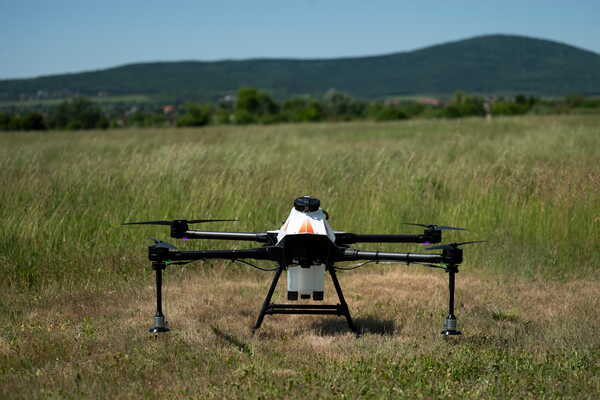
Sweden Launches Drone Testing Hub in Karlsborg to Enhance Defense Capabilities
Sweden is establishing a new drone testing facility in Karlsborg aimed at enhancing its defense mechanisms against emerging threats. This initiative is part of a broader strategy to bolster national security and adapt to the evolving landscape of aerial warfare.


Key facts
- Sweden's new drone testing hub will be located in Karlsborg.
- The facility aims to enhance defense capabilities against emerging threats.
- It will promote collaboration between military and civilian sectors.
2 minute read
Sweden’s planned drone test hub in Karlsborg signals a deliberate push to harden national and allied defenses against the rapid proliferation of uncrewed systems. The site is poised to become a focal point for integrating intelligence, surveillance and reconnaissance payloads, electronic warfare and counter-UAS, secure communications and autonomy into concepts that can be fielded quickly.
As a new NATO member, Sweden can use the facility to validate interoperability with allied platforms and data standards, refine tactics for manned-unmanned teaming, and stress test logistics drones that must operate in GPS-contested environments. Close civil-military cooperation should shorten test cycles and link universities, startups and primes to operational users, giving Europe faster iteration without sacrificing safety, export control or cyber hardening.
By concentrating test and evaluation at Karlsborg, Stockholm can de-risk procurement, build a domestic supply base for key components and reduce vulnerabilities in non-European supply chains while staying compatible with NATO architectures. Nordic and Baltic partners will likely plug in through joint trials and exercises, supporting a more coherent air and missile defense posture across the Arctic-Baltic region.
The hub aligns with EU efforts under the European Defence Fund and complements initiatives on airspace integration and beyond-visual-line-of-sight corridors, which are essential for scaling dual-use drone services that can transition to military tasks in crises. It also sends a deterrent signal to Russia by improving Sweden’s ability to detect, defeat and adapt to low-cost autonomous threats and electronic attack.
If executed at pace, Karlsborg could become a regional anchor for NATO-standard UAS innovation, accelerating Europe’s shift to dispersed, resilient and software-driven warfare.
Source: Defence Industry Europe
You might also like to read...
 Mr. T (Curator)
 Mr. T (Curator)
 Mr. T (Curator)