TEKEVER and ARKEUS Enhance UAS Capabilities with Warden Hyperspectral Sensor
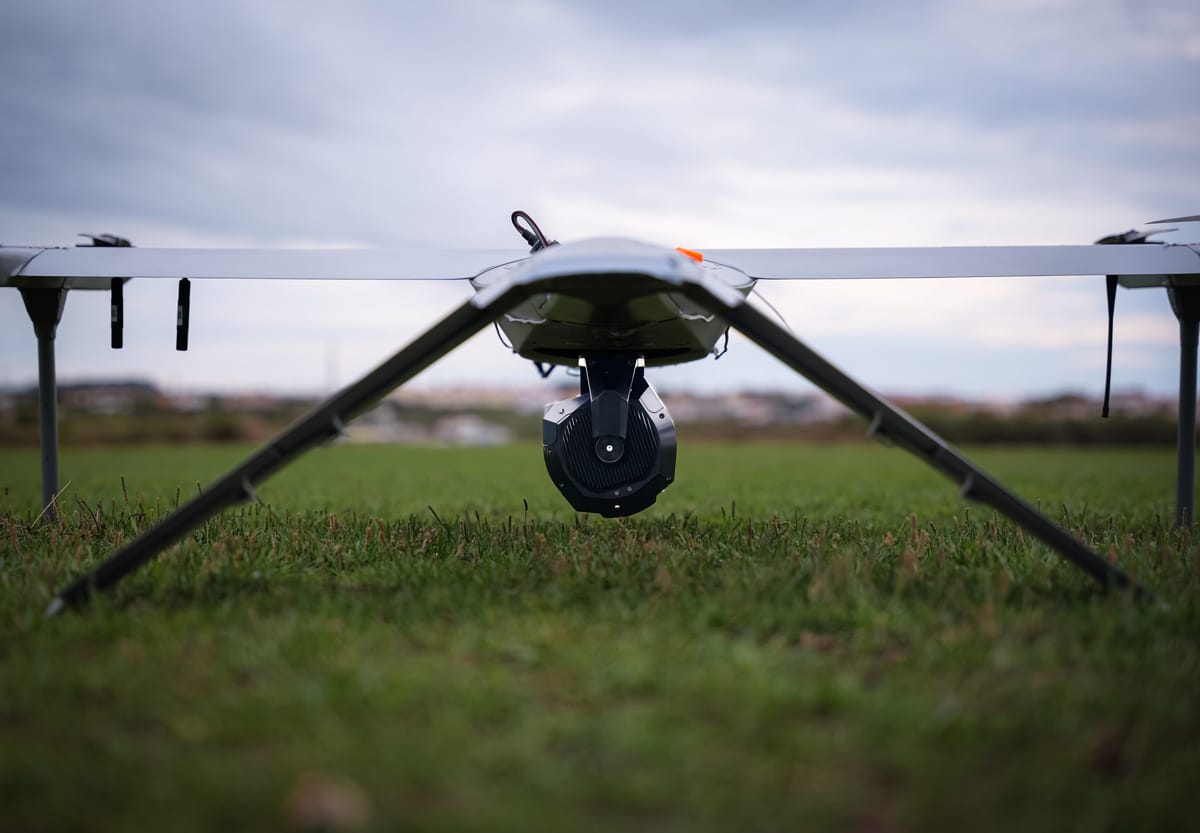
TEKEVER and ARKEUS have successfully integrated the Warden hyperspectral sensor with TEKEVER’s AR3 EVO UAS, enhancing long-range detection and operational effectiveness in complex environments. This collaboration marks a significant advancement in ISR capabilities for defense and security missions a

Key facts
- TEKEVER’s AR3 EVO UAS integrates with ARKEUS’ Warden HSOR for enhanced ISR.
- The Warden HSOR enables detection in low-visibility and contested environments.
- This collaboration signifies a leap in operational capabilities for European defense.
2 minute read
TEKEVER’s integration of ARKEUS’ Warden hyperspectral sensor on the AR3 EVO signals how Europe aims to expand intelligence, surveillance and reconnaissance without relying on larger, more vulnerable platforms. Hyperspectral sensing adds a spectral layer that can reveal camouflaged and low-contrast targets through haze, smoke and sea clutter, strengthening maritime policing, border security and land ISR from the North Atlantic to the Black Sea. Because AR3 is ship portable and runway independent, navies, coast guards and gendarmeries can deploy this at scale from small vessels and austere sites, maintaining reach in GPS contested and EW heavy environments where traditional EO or radar perform poorly.
Strategically, the move advances two priorities. First, modular payload integration accelerates fielding on existing airframes, compressing cost and timelines versus bespoke programs. Second, pairing a European UAS with a trusted non US allied sensor diversifies supply chains while remaining compatible with NATO data standards, supporting EU goals for greater autonomy without weakening alliance interoperability. If adopted broadly, hyperspectral ISR can tighten maritime domain awareness, sanctions enforcement and counter deception, from detecting small craft and illicit spills to spotting mines and decoys. It complements multi sensor fusion on MALE UAVs and crewed aircraft by using spectral cues to tip and cue other sensors, improving detection and confirmation cycles without large bandwidth overheads.
The immediate challenge is scaling from trials to accredited payloads, common data products and operator training so spectral outputs translate into timely decisions. Expect rapid experimentation in NATO exercises and EU operations as budgets shift toward resilient, multi phenomenology sensing. Europe is moving toward adaptable, sensor rich UAS fleets that evolve faster than adversary camouflage and denial tactics.
You might also enjoy..
 Mr. T (Curator)
 Mr. T (Curator)
 Mr. T (Curator)