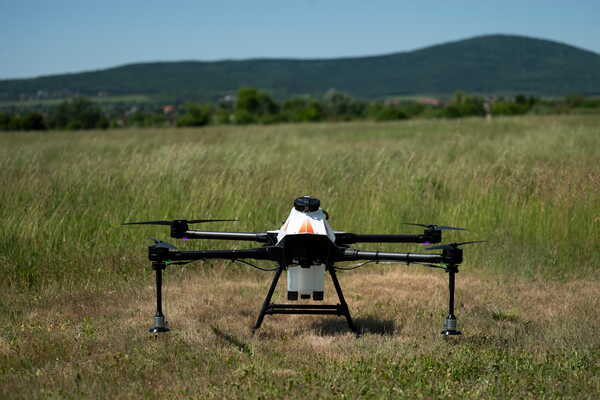
The Impact of Drone Payloads on Efficiency and Value
Commercial drones have advanced significantly, with their real-world value now defined by the capabilities of their payloads. This evolution emphasizes the importance of intelligence, precision, and efficiency over traditional metrics like flight time and range.


Key facts
- Drones are now valued for their payload capabilities rather than just flight metrics.
- Intelligence and precision in payloads are key to maximizing ROI.
- Industries are increasingly integrating advanced payloads for specific operational needs.
2 minute read
The centre of gravity in drone programmes is shifting from airframes to payloads. For European governments and NATO forces, value is measured in detection accuracy, geolocation fidelity, and the speed of turning sensor data into taskable intelligence. Procurement should prioritise open and swappable payload bays, common data formats, and edge processing that functions in congested and contested spectrum. Tie payment to mission outcomes, not flight metrics.
Industrial policy now shapes operational resilience. Europe still depends on non EU suppliers for thermal cameras, RF sensing, and GNSS denied navigation aids, which creates export risk and sustainment friction. The European Defence Fund and national initiatives should back sovereign or allied co development of infrared, multispectral, LiDAR, and electronic support payloads, alongside secure AI processors. Alignment with NATO STANAG standards and EASA pathways for BVLOS will compress integration timelines and broaden dual use deployments across infrastructure, public safety, and border security.
On operations, a payload first approach demands modular fleets, cyber hardened architectures, and interoperability with NATO command and control. Units need assured PNT alternatives, resilient datalinks, and onboard autonomy to filter and fuse data at the edge, then send only actionable products over limited bandwidth. Training and doctrine should shift toward sensor tasking, data governance, and counter electronic warfare tactics. Measures of effectiveness should emphasise detection rates, false alarm reduction, and decision latency.
Europe’s next edge will come from modular payloads and edge intelligence that compress the sensor to shooter timeline.
You might also like...
 Mr. T (Curator)
 Mr. T (Curator)
 Mr. T (Curator)