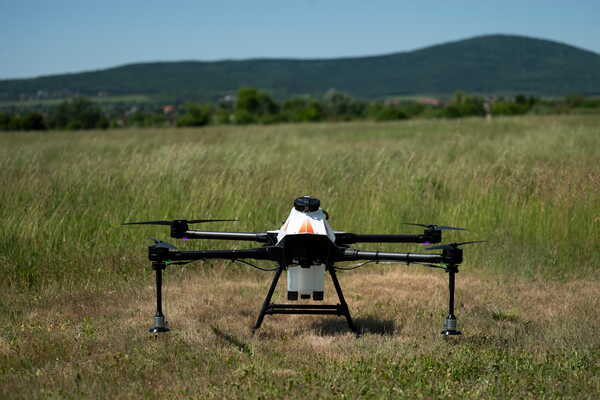
Ukraine and Norway Collaborate on Drone Production
Ukraine and Norway have initiated a collaborative effort to produce drones, enhancing their defense capabilities. This partnership aims to strengthen military cooperation and technological advancements in unmanned aerial systems (UAS) amidst ongoing regional tensions.

Key facts
- Ukraine and Norway have launched a joint drone production initiative.
- The collaboration aims to enhance military capabilities and technological advancements.
- This partnership reflects a broader trend of defense cooperation in Europe.
3 minute read
The agreement signed this week between Ukraine and Norway to co-produce drones marks a definitive break from the emergency aid model that has defined the war's early years. By moving from ad hoc donations to sustained industrial cooperation, Kyiv and Oslo are acknowledging that the conflict’s demand for unmanned systems can no longer be met by charity alone. For Ukraine, the deal offers a lifeline of local assembly anchored by a NATO supplier, diversifying its supply chain and shortening the critical lead times that often determine tactical success.
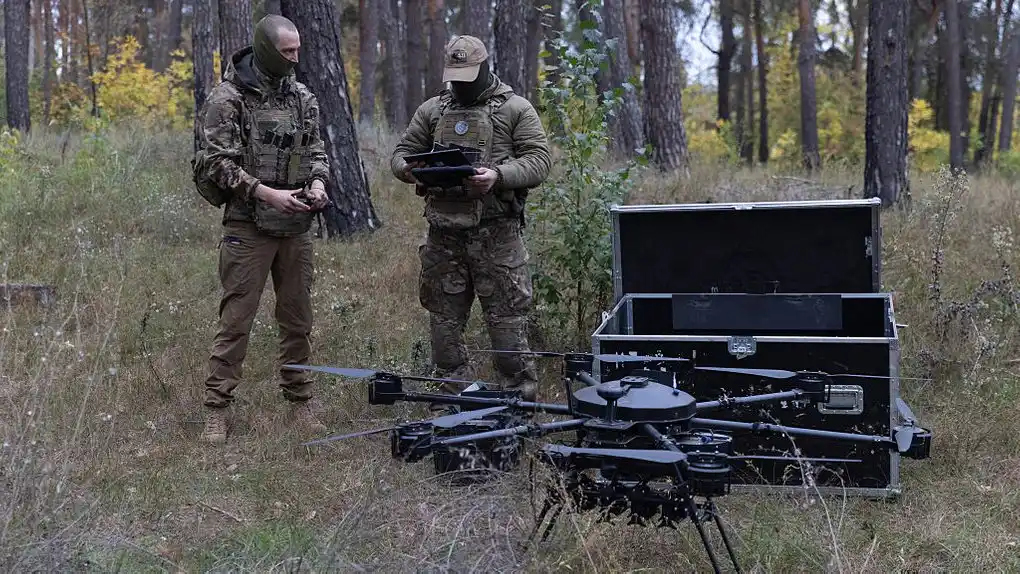
Prime Minister Denys Shmyhal, who signed the document alongside Norwegian Defense Minister Tore Sandvik, framed the pact as a maturation of Kyiv’s wartime strategy. "This is exactly the type of cooperation we want to build, joint projects that strengthen the defense in both our countries," Shmyhal said, noting that the partnership goes beyond mere hardware delivery. "Ukraine will share its experience and innovations with Norway. In turn, we will receive a strong production base that will supply our soldiers with modern drones."
The plan is aggressive. A pilot production line is scheduled to launch rapidly in 2026, with simultaneous efforts to expand capacity. For Oslo, the benefits are equally strategic. Partnering with an active warfighter accelerates iteration cycles and informs requirements in real-time, positioning Norwegian firms in the fastest-scaling segment of the European defense market. Defense Minister Sandvik emphasized that this reciprocal flow of technology is about more than just one conflict. "The goal is to achieve closer and deeper cooperation with the Norwegian defense industry to increase production capacity and thereby Europe's security," Sandvik stated.
This arrangement supports critical NATO interoperability goals, including common data links and shared maintenance concepts that are essential as allied forces field swarms and counter-UAS systems in the same battlespace. However, the policy design will be as complex as the engineering. Co-production will test export controls, intellectual property rights, and battlefield data governance. Aligning Norwegian standards with Ukraine’s rapid wartime innovations could eventually feed NATO doctrine on distributed command and control and electronic warfare resilience.
The deal fits a broader pattern of integrating Ukraine’s battle-hardened designs with Western industrial depth. Just days prior, delegations from Kyiv and London signed a similar licensing agreement for the "Octopus" interceptor drone, a Ukrainian-designed system capable of downing Russian Shahed munitions. Shmyhal described the UK deal as a "historic precedent" that would allow "mass production of the interceptors, potentially reaching several thousand units per month."
If these partnerships scale, they will nudge Europe toward mass, modularity, and rapid upgrade cycles in UAS. The industrial effects could extend beyond airframes to include joint work on secure navigation and optical payloads, strengthening Europe’s sensor stack in a market currently dominated by U.S. and Asian suppliers. For maritime NATO missions, Norwegian experience in harsh-weather operations could translate into specialized UAS for the High North and seabed infrastructure protection. Ultimately, these nimble co-production deals represent a new model for air power, one that binds frontline necessities to European industry to redefine capabilities at the tactical edge.