Ukraine Plans to Acquire Up to 150 Swedish Gripen Jets
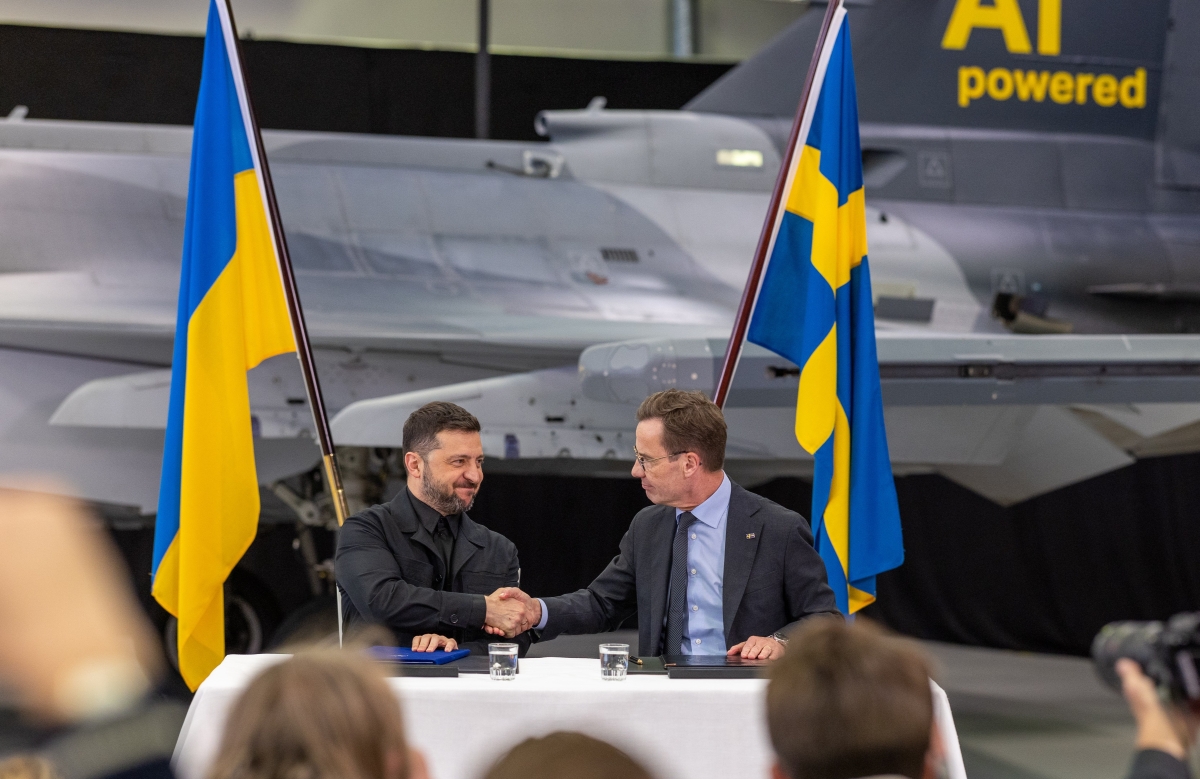
Ukraine is looking to significantly enhance its air force capabilities by purchasing up to 150 Swedish Gripen fighter jets. This move aims to more than double the current size of Ukraine's air force, reflecting the country's ongoing efforts to bolster its military strength amid ongoing conflicts.

Key facts
- Ukraine aims to buy up to 150 Swedish Gripen fighter jets.
- The order could more than double Ukraine's current air force.
- The Gripen jets are known for their advanced technology and versatility.
Summary
Kyiv’s interest in up to 150 Saab Gripen fighters signals a pivot from ad hoc donations to a structured, long term airpower plan. The scale would anchor a European built core for Ukraine’s future air force, but it hinges on financing, export approvals and industrial capacity. Sweden would need to map a multi year production and sustainment pathway, and partners would need to underwrite aircraft, training and munitions at predictable levels. The Gripen’s design fits Ukraine’s operational problem. It can disperse to short or rough runways, turn around quickly with small crews and operate with relatively low lifecycle costs. Those attributes matter against Russia’s missile pressure on fixed bases and in a resource constrained environment. Interoperability will be the gating factor. Ukraine is already integrating F 16s, Western air defenses and NATO style command systems. A mixed F 16 and Gripen fleet increases survivability and availability, but it complicates training pipelines, maintenance, spares and weapons integration. Standardized data links, electronic warfare libraries and munitions stocks will drive timelines as much as airframes. Politics remain decisive. Stockholm, now in NATO, must manage domestic industry priorities and export controls. Any US content on subsystems or weapons will require Washington’s consent. European governments will need to align financing, possibly blending national funds with EU instruments and Nordic cooperation, and to expand missile supply chains for Meteor, IRIS T and AMRAAM. Industry will face a ramp decision. Saab and its suppliers would need long term orders to invest in capacity, while partners consider maintenance hubs in Central Europe and, eventually, in Ukraine. Deliveries would likely phase over years, so near term air defense and F 16 integration remain critical. The deal, if structured well, would deepen NATO Ukraine interoperability and shift more of Europe’s airpower industrial base onto the continent. Europe’s defence is moving toward a more networked and resilient model built for sustained high intensity conflict.
You might also like to read....
 Mr. T (Curator)
 Mr. T (Curator)
 Mr. T (Curator)