Ukraine to seek $20B at Ramstein to sustain strike campaign on Russia
Ukraine will ask allies for $20B at the June 18 Ramstein meeting to fund air defense, drones, EW and long-range strike—raising near-term pressure on European budgets and production capacity.


Key facts
- Ukraine plans to request an additional $20B from allies on June 18 at the Ukraine Defense Contact Group (Ramstein) meeting.
- Kyiv says the funding would support air defense, drones, ammunition, electronic warfare, long-range capabilities, and procurement from Ukrainian defense firms.
- POLITICO reports partners have committed $38B in military aid for 2026; an extra $20B would push support toward a $60B target linked to NATO’s leadership.
3 minute read
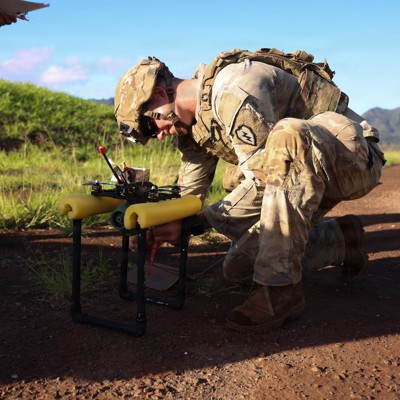
Ukraine is preparing to table a $20 billion emergency defense financing request to allies at the June 18 Ukraine Defense Contact Group meeting (Ramstein Format), with individual partners asked for roughly $2–6 billion each, according to a senior Ukrainian defense official quoted by POLITICO. The stated intent is to lock in what Kyiv describes as a temporary battlefield advantage and to sustain an “increasingly devastating” long-range campaign that blends short-range drone saturation at the front with mid-range strikes on logistics nodes and deeper attacks against industrial and energy targets inside Russia.
Kyiv’s spending context is unusually elevated: Ukraine’s 2026 defense budget is cited at 4.4 trillion hryvnia (€85 billion), and the article states Ukraine is allocating about 40 percent of GDP to defense. Partners have already committed $38 billion in military assistance for 2026, and an additional $20 billion would bring total support close to a $60 billion bilateral assistance target previously associated with NATO Secretary-General Mark Rutte. Kyiv signals that the incremental funding would be allocated across air defense, ammunition, electronic warfare, long-range capabilities, and expanded purchases of drones, alongside direct procurement from Ukrainian firms.
For Europe, the immediate implication is a renewed stress test on fiscal headroom and on the industrial capacity for air and missile defense, EW, and interceptors—areas where European demand is already competing with replenishment and homeland requirements. The inclusion of NATO’s Prioritised Ukraine Requirements List and references to purchases “from the United States” imply that a portion of any new European tranche could translate rapidly into U.S.-sourced systems, unless European production can meet timelines. Politically, the framing of a closing “window of opportunity” and warnings about Russian adaptation underscore Kyiv’s preference for front-loading resources into strike and counter-strike cycles, which may sharpen European debates about escalation management, resilience against Russian retaliation, and the sustainability of multi-year support mechanisms ahead of the July NATO summit in Ankara.
Source: POLITICO Europe