Ukraine’s “Steel Porcupine” Doctrine: Mass Army, Drones and Long-Strike
Ukraine’s “steel porcupine” plan bets on an 800,000-strong force, mass drone procurement and scalable domestic production as a substitute for uncertain postwar guarantees.


Key facts
- Ukraine’s postwar deterrence concept prioritises self-reliance: a large standing force, domestic production and rapid drone/missile development rather than reliance on external guarantees.
- Ukraine insisted in talks on retaining an 800,000-strong military; the defense minister cited 2 million wanted for draft avoidance and 200,000 AWOL.
- In 2025 Ukraine’s MoD reportedly contracted 4.5 million FPV drones and spent over 110 billion hryvnia (€2.1bn) on drone-related procurement; industry capacity was cited at ~$35bn vs ~$12bn contracted.
3 minute read
Ukraine is explicitly reframing postwar security around autonomous deterrence rather than reliance on external guarantees, adopting a “steel porcupine” concept championed by European Commission President Ursula von der Leyen. In Kyiv’s articulation, the durable centre of gravity is a permanently large army coupled to a defense industry able to sustain serial production under pressure, with drones, missiles, electronic warfare and munitions treated as the decisive enablers of cost-imposing attrition against a future Russian attack.
The concept is driven by scepticism that any peace-deal assurances short of NATO Article 5 would be enforceable. The text links this to US political uncertainty and to Russia’s signalling that it will oppose meaningful guarantees for Ukraine. NATO Secretary-General Mark Rutte is cited arguing that guarantees remain necessary, including discussion of European troop deployments and a US “backstop”, but Ukrainian voices emphasise these measures as additive rather than substitutive.
Operationally, the intended posture is manpower-intensive. Ukraine has insisted in talks on retaining an 800,000-strong force, yet faces serious recruitment and retention headwinds: the defense minister is quoted stating that 2 million Ukrainians are wanted for draft avoidance and 200,000 have gone AWOL, while demobilisation pressures would rise under a ceasefire. Ukrainian analysts call for structural reform, improved training and professionalised NCO/officer education; the defense minister is cited promising digitalisation and anti-corruption reforms to increase trust and performance.
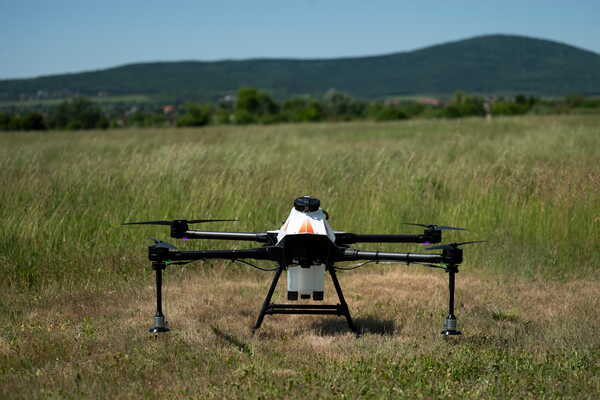
Technologically, Ukraine’s deterrent logic hinges on scaling drone and strike systems from wartime improvisation into stable, quality-controlled mass production. The Ministry of Defense reportedly contracted 4.5 million FPV drones in 2025 and spent over 110 billion hryvnia (€2.1 billion) on drone-related procurement, three times the previous year. Industry sources stress that the near-term bottleneck is not innovation but batch-to-batch stability, QA and uninterrupted production lines.
Long-range strike is framed as the punitive element of deterrence. The article notes ongoing Ukrainian missile efforts and references earlier, unmet production claims around the Flamingo FP-5 cruise missile, while also citing UK–Ukraine work on a 500 km-range tactical ballistic missile with a 200 kg warhead. For Europe, this underscores a dual-track requirement: financing Ukraine’s industrial resilience through EU mechanisms (including SAFE and a planned €90 billion loan with a large defense allocation) while managing procurement integration, export-control constraints and escalation risk linked to deep-strike capabilities.
Industrial capacity and financing are presented as the decisive strategic variable. Ukrainian industry is said to have had ~$35 billion of annual production capacity but received only ~$12 billion in contracts, leaving up to 60% underutilised. The proposed solution is long-term, predictable contracting, protected sites, automation and domestic test infrastructure—areas where European capital, standards alignment and joint production could become pivotal if Brussels intends Ukraine to function as both a front-line deterrent and a contributor to Europe’s wider defense-industrial base.
Source: POLITICO Europe