Ukraine's Strategy to Outsmart Russian Air Defenses with Advanced Drones
As Ukraine continues its conflict with Russia, it is rapidly developing smarter drones to evade and counter Russian air defenses. This article explores the innovative strategies and technologies being employed to enhance drone capabilities, aiming to shift the balance in aerial warfare.

Key facts
- Ukraine is developing advanced drones to evade Russian air defenses.
- Integration of AI is enhancing drone operational capabilities.
- Western allies are providing support and training to bolster Ukraine's drone strategy.
2 minute read
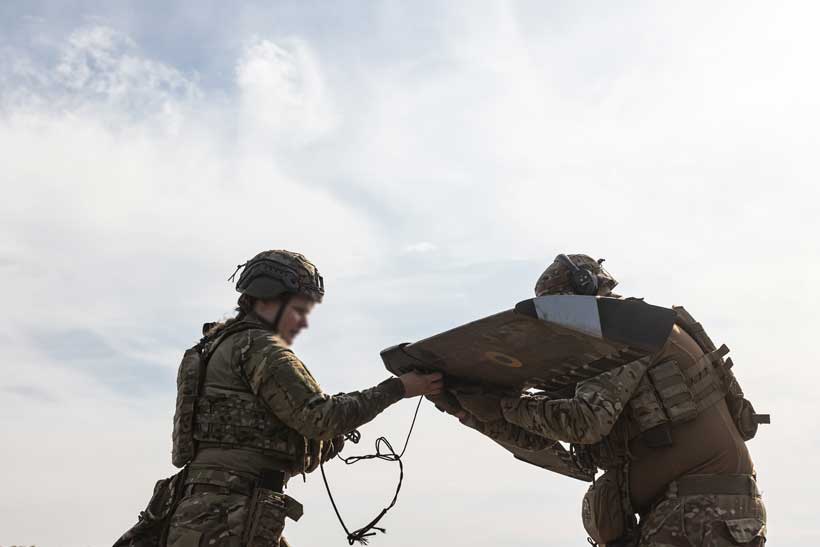
Ukraine is shifting from platform-centric strikes to a systems fight against Russia’s layered air defenses. The approach blends long-range one-way attack UAVs, mass FPV fleets, expendable decoys, and reconnaissance drones to saturate sensors, force costly interceptor launches, and reveal firing locations. Autonomy and machine learning increasingly manage routing, terrain masking, and retasking under jamming, reducing dependence on vulnerable control links. The goal is persistent pressure that degrades radar coverage and shortens the kill chain for artillery and stand-off missiles. Distributed launch cells and mobile workshops compress timelines from design to fielding.
For Europe and NATO, the core lesson is the cost exchange. Low-cost autonomous drones can chip away at high-end air defenses if supported by resilient command and data networks. Priorities include edge processing for target recognition, alternative navigation beyond GPS, mesh communications that survive electronic attack, and rapid munition adaptation cycles. Western training and industry support are helping Ukraine fuse ISR with strike in near real time, though scaling demands standardized data formats, shared threat libraries, and tighter ISR-to-fires integration.
Policy and industrial choices now matter as much as tactics. Building depth in attritable airframes, secure component supply chains, and regional repair hubs will decide sustainability. Coordinated export controls can constrain adversary access to critical chips, while joint European procurement and test ranges can speed certification of new UAVs and counter-UAS tools. Air defenders must expand layered SHORAD, passive detection, and electronic attack to match the threat’s volume and agility. Europe’s defense will increasingly be defined by software-driven mass and rapid adaptation.