Ukrainian drone strikes strain Russia’s fuel logistics as shortages spread
Fuel shortages across over half of Russia’s regions—linked to Ukrainian drone strikes—highlight how low-cost UAS can impose strategic economic strain and expose energy-logistics vulnerabilities relevant to European resilience planning.

Key facts
- More than half of Russia’s 83 regions are reported to be facing gasoline shortages.
- Shortages are attributed overwhelmingly to Ukrainian drone strikes against Russian refineries and fuel infrastructure.
- Local authorities are imposing daily limits/restrictions and messaging to prevent panic buying, creating a political headache for the Kremlin.
3 minute read
Reports that gasoline shortages are affecting more than half of Russia’s 83 regions point to a widening domestic impact from Ukraine’s deep-strike campaign against Russian refining and fuel infrastructure. Local authorities are described as imposing daily purchase limits and other restrictions, alongside public messaging intended to deter panic buying—an indicator that the issue is moving beyond routine regional logistics friction into a politically salient problem for Moscow. While Russia remains a major crude exporter, refined products are constrained by refinery availability, maintenance cycles, and distribution capacity; when refineries are disrupted, shortfalls can propagate quickly through regional supply chains, particularly where resupply relies on rail corridors and centralized storage.
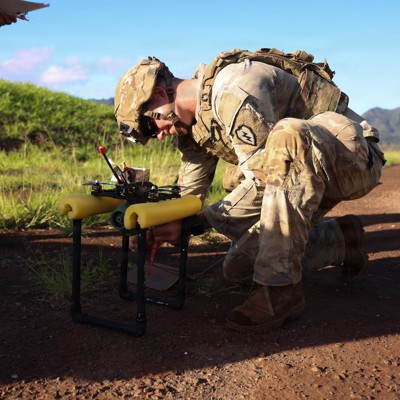
The emphasis on Ukrainian drone strikes as the overwhelming cause is notable for European audiences because it demonstrates a repeatable mechanism by which relatively inexpensive, attritable uncrewed systems can generate strategic effects without requiring air superiority. Attacks on refineries and associated nodes impose a dual burden: they reduce output and force defensive dispersion of resources to protect a geographically fixed, high-value industrial base. Even intermittent strikes can create disproportionate operational costs through shutdowns, safety inspections, repair cycles, insurance constraints, and the need to reallocate fuel from other regions—effects that are amplified when authorities attempt to manage public perception and demand.
For Europe, the immediate implication is twofold. First, the Russian state’s ability to sustain high-tempo military operations is indirectly tied to domestic fuel stability; civilian shortages can trigger prioritisation decisions, internal transport disruptions, and political sensitivity that may influence resource allocation between the home front and the battlefield. Second, the episode is a cautionary analogue for European critical infrastructure: refineries, depots, and rail-linked distribution hubs represent attractive targets in any future grey-zone or high-intensity contingency. European procurement and protection priorities should therefore treat counter-UAS, physical hardening, redundancy in fuel distribution, and rapid repair capacity as elements of national resilience rather than purely tactical air-defence concerns.
Source: RFE/RL