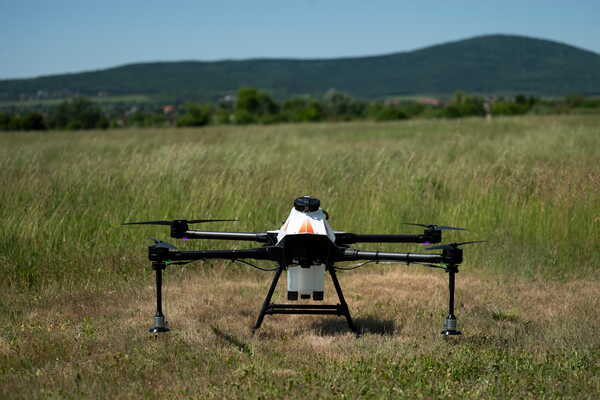
Unidentified Drones Sighted Over Belgian Army Base
Unidentified drones have been reported flying over a Belgian army base, raising concerns about security and airspace integrity. The incidents have prompted investigations by military authorities to determine the origin and intent of these drones.

Key facts
- Unidentified drones spotted over a Belgian army base.
- Belgian military is investigating the incidents.
- Concerns raised about airspace security and counter-drone measures.
2 minute read
Incursions over a Belgian army base highlight how low cost drones can probe defences, collect imagery, and map response timelines at altitudes where traditional air surveillance is weakest. For Belgium, the immediate task is to tighten the sensor to responder chain around military facilities, linking base security teams, national air policing, and civil aviation authorities through a shared operating picture and clearly delegated authorities for detection, identification, and defeat. A credible posture blends radio frequency detection, electro optical tracking, passive sensing, and data fusion that enables timely, proportional countermeasures. At alliance level, the episode exposes uneven short range counter UAS coverage across Europe. NATO’s air and missile defence is robust at medium and high altitude, yet small unmanned systems still exploit gaps in attribution, rules of engagement, and civilian military handover. Allies should standardise tactics and equipment, exploit Remote ID and geofencing data, and integrate counter UAS feeds with air traffic systems at bases, depots, ports, and energy nodes that underpin reinforcement plans. Law and policy are as decisive as technology. Governments need standing authorisations for jamming, spoofing, and kinetic options near populated areas, with procedures for evidence handling and prosecution. Responsibilities among defence, interior, and air navigation service providers should be codified, and installations should be red teamed routinely with friendly drones to measure detection and response. Procurement should prioritise modular, interoperable systems and lifecycle upgrades, leveraging EU funding and NATO standards to accelerate fielding. If attribution suggests foreign intelligence or organised crime, expect tighter no fly zones, persistent surveillance, and more rigorous enforcement. Europe will treat low altitude drones as a continuous security challenge that demands layered defences and rapid adaptation.
 Mr. T (Curator)
 José Vadio
 Mr. T (Curator)