Unidentified Drones Target Key European Sites: A Defense Response Needed
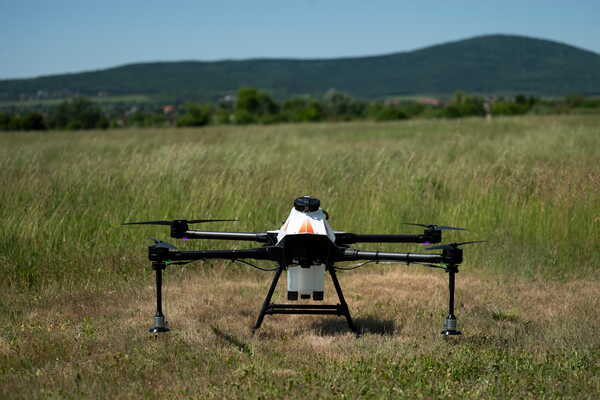
Recent sightings of unidentified drones over critical sites in Europe have raised security concerns. Governments are urged to develop comprehensive defense strategies to address potential threats posed by these unmanned aerial systems (UAS).

Key facts
- Unidentified drones have been spotted over critical sites in Europe.
- Concerns include potential espionage and terrorist threats.
- A unified European defense strategy is recommended for effective response.
2 minute read
Unidentified drone activity over European military, governmental and energy sites exposes a persistent gap in low altitude security and attribution. The threat profile ranges from ISR collection and mapping of defenses to delivery of payloads or coordinated disruption. Because commercial platforms are cheap, modular and often compliant with parts of existing rules, enforcement hinges less on flight legality and more on hostile intent, which is difficult to prove in real time. This is a policy problem as much as a technical one, and it demands clarity on who can detect, decide and defeat within minutes.
EU and NATO should align on a common counter UAS framework that standardizes detection thresholds, data formats and lawful effectors. Member states need explicit authorities for RF interception, GNSS spoofing mitigation and kinetic or non kinetic defeat over public space, with privacy and aviation safety safeguards. A federated low altitude air picture tied to U space services and NATO integrated air and missile defense would close seams between civil and military control. Shared watch floors, joint training and rapid cross border assistance should be routine, not exceptional.
Operationally, prioritize layered protection of critical nodes, passive RF sensors, short range radars, EO and acoustic detection fused with remote ID, backed by agile jamming and precision interceptors. Fund common testing, red teaming and exercises to validate tactics against swarms and autonomous navigation. Use EU procurement to drive interoperability and supply chain assurance for C UAS, and tighten import controls on sensitive components. Clear escalation ladders and attribution mechanisms will deter state enabled proxies and guide proportional response. Europe must move fast to master the sub 400 foot battlespace.
You might also like...
 Mr. T (Curator)
 Mr. T (Curator)
 Mr. T (Curator)