US Army scales up drone warfare drills in Lithuania
Project Flytrap 5.0 in Lithuania shows the US Army scaling troop-to-battalion drone and counter-UAS integration with 20+ systems, jammers and AI tools—an approach Europe is likely to mirror for NATO interoperability.

Key facts
- Project Flytrap 5.0 in Lithuania involved the US Army’s 2nd Cavalry Regiment working with international partners.
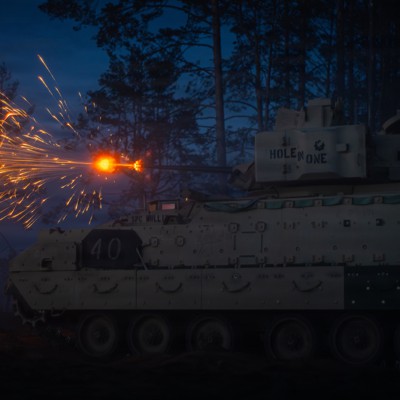
- Participants tested more than 20 pieces of equipment, integrating systems with Strykers and unmanned ground vehicles.
- The exercise used reconnaissance drones, FPV attack drones, jammers and AI-enabled operating systems, with Flytrap 6.0 expected to scale further with more UAS and electronic warfare in the scenario.
3 minute read
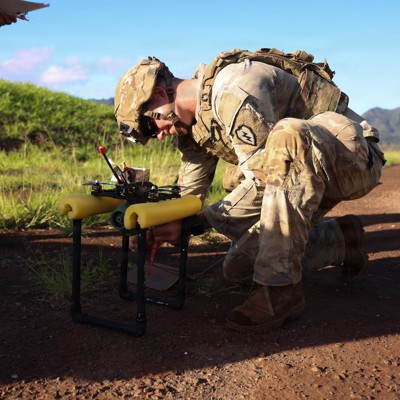
Project Flytrap 5.0, a US Army–NATO exercise conducted in Lithuania, illustrates how drone warfare is being pushed down to the tactical edge as an expected competency for manoeuvre units rather than a specialist add-on. According to commanders from the 2nd Cavalry Regiment, the emphasis is no longer limited to launching small reconnaissance drones to spot targets for indirect fires; it now includes persistent awareness of what is in the airspace above friendly forces, options to defeat or evade hostile UAS, and the organisational integration required to make counter-UAS a shared problem across intelligence, fires and manoeuvre.
The exercise reportedly involved testing more than 20 pieces of equipment and integrating emerging technologies with Stryker formations and unmanned ground vehicles. The toolkit described by participants spans reconnaissance drones, first-person-view attack drones, jammers, and AI-enabled operating systems intended to accelerate detection, targeting and decision-making. In practical terms, this points to a combined-arms adaptation where short-range UAS and counter-UAS are treated as mutually dependent capabilities: friendly drones expand sensing and strike options while simultaneously increasing the need for electromagnetic discipline, detection and localised air denial against comparable threats.
Flytrap’s organisers highlighted an explicit scaling trend: higher-echelon participation (focused in this iteration at troop and squadron levels, broadly comparable to company and battalion), larger numbers of UAS in the scenario, and increased realism and complexity in the opposing force. The stated intention to make Flytrap 6.0 “even bigger” by introducing a more realistic enemy employing more UAS and electronic warfare indicates the Army is preparing for dense drone environments and contested spectrum conditions that mirror lessons from Ukraine and other contemporary theatres.
For European defence officials and industry, the implication is that US forces training on NATO’s eastern flank are converging on interoperable, layered counter-UAS concepts that blend detection, electronic attack, kinetic defeat and manoeuvre adaptation. This strengthens the case for European programmes that prioritise open interfaces, rapid field experimentation and unit-level integration over bespoke, platform-centric solutions. It also underscores procurement pressure for EW-hardened small UAS, scalable counter-UAS sensors and effectors, and common tactics and data standards that enable multinational formations to share air picture and countermeasures in real time.
Source: Defense One