
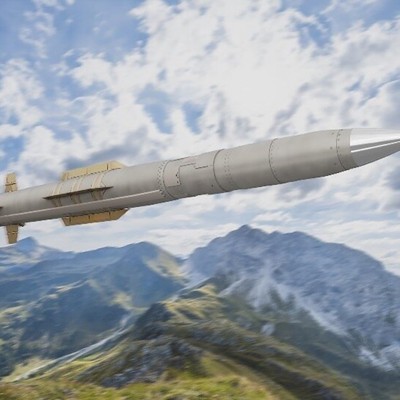
Lockheed pitches PAC-3 “ACE” as cheaper ballistic-missile interceptor
Lockheed’s PAC-3 ACE concept would trade some high-end capability for lower cost and higher volumes, leveraging existing Patriot launchers to bolster SRBM defence amid PAC-3 shortages—an immediate relevance for European Patriot operators and Ukraine support.

Key facts
- Lockheed’s PAC-3 ACE would use existing PAC-3 launchers and command-and-control software but cheaper subsystems (motor, radar/seeker, electronics).
- ACE is positioned for lower-tech short-range ballistic missile threats; Lockheed says it is not designed for counter-drone missions.
- Lockheed signals interest in joint development/production with European partners and suggests production could start around 2028, depending on funding.
3 minute read
Lockheed Martin’s unveiling of the PAC-3 “Adapted Capability Effector” (ACE) at Farnborough is best read as an industrial response to a munitions-availability crisis rather than a pure technology play. The company says ACE would be fired from existing PAC-3 launchers and use current command-and-control software, but would substitute cheaper elements—rocket motor, radar/seeker, and onboard electronics—reducing unit cost and easing production bottlenecks. A missile defence analyst quoted in the source highlights the seeker as a key cost driver for PAC-3, implying that simplification of guidance hardware is central to the business case.
Operationally, Lockheed and external commentary in the piece frame ACE as “less exquisite” than today’s PAC-3 and therefore not optimised for the most advanced missile threats, but still relevant against short-range ballistic missiles used in destructive attacks by Russia and Iran. Cahill explicitly cautions ACE is not designed for counter-drone missions, underscoring an intended niche between high-end ballistic missile defence and the proliferating, cheaper counter-UAS market. The cited example threat is the Russian Iskander-M, with the argument that a more affordable interceptor is required to sustainably engage such targets at scale.
For Europe, the implications are immediate: the PAC-3 community includes multiple European Patriot operators, and Lockheed is pitching ACE to compatible users while stating it envisions joint development and production with European partners. If realised, this could offer European governments a faster route to expand magazine depth without procuring only the highest-end interceptors, while also creating leverage for European industrial participation in Patriot-related supply chains. The article also reinforces a capability gap narrative around short-range ballistic missile defence for Ukraine, contrasting Patriot performance with the French-Italian SAMP/T, which Ukrainian officials have reportedly characterised as less effective against ballistic missiles. That framing increases political pressure on European capitals to either deepen Patriot/PAC-3 integration, accelerate SAMP/T NG maturation, or pursue complementary “lower-cost interceptor” paths to protect critical infrastructure and deployed forces.
Lockheed’s timeline—production potentially in 2028, or sooner if governments fund and cooperate—puts the burden on procurement decisions and co-production arrangements now. For European officials, the key procurement question is whether ACE would be bought as a PAC-3 supplement to preserve high-end rounds for the most stressing threats, or whether it risks becoming a substitute that changes defended-asset planning assumptions due to reduced performance against advanced missiles.
Source: Defense One


