Europe moves to backfill US cuts in NATO force model, Rutte says
NATO’s Rutte says Europe has already replaced most US-removed capabilities in NATO war plans, but strategic bomber capacity remains a structural European gap.


Key facts
- Rutte said European allies have committed to replacing “most” capabilities the US removed from NATO’s force model.
- The US drawdown covers strategic bombers, fighter jets, drones, submarines and warships and takes effect immediately, per diplomats cited.
- Allies aim to submit replacement offers by early July ahead of NATO’s July 7–8 Ankara summit, with “immediate activation” if adequate.
3 minute read
Mark Rutte’s claim that European allies have replaced “most” of the US capabilities removed from NATO’s force model signals both political intent and a near-term operational triage: allies are trying to ensure NATO’s war plans remain executable despite Washington’s decision to adjust its earmarked contributions. According to the report, the United States has withdrawn a broad set of capabilities—strategic bombers, fighter jets, drones, submarines and warships—from the pool NATO planners assume is available in wartime. The practical effect is doctrinal and procedural as much as material: these assets are no longer baked into NATO’s standing plans, even if the US could still deploy them at its discretion in a crisis.
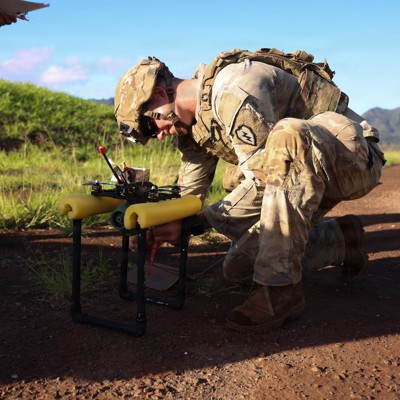
For Europe, the most consequential element is not the headline drawdown but the implied shift in assurance. If US high-end assets are treated as optional rather than guaranteed for NATO planning, European governments must either commit national forces to cover those roles or accept increased operational risk and longer reinforcement timelines. The report suggests allies are making a mix of like-for-like substitutions and compensatory changes in concepts of operation—explicitly including the substitution of “traditional aerial assets with drones.” That points to an emerging European trade space between mass, survivability and cost: uncrewed systems may help cover ISR and strike capacity, but they do not replace the deterrent and penetration roles associated with strategic bombers, which the report notes Europe lacks.
The timeline also matters. Diplomats cited by Politico indicate new offers are expected by early July with “immediate activation,” ahead of NATO’s July 7–8 Ankara summit. If accurate, that compresses national decision-making and readiness generation into weeks, favouring states that can rapidly commit existing, trained and deployable units rather than notional future forces. In procurement terms, this dynamic rewards mature programmes and available stockpiles over longer-lead industrial plans.
Strategically, the episode reinforces a US posture of selective allocation—consistent with a pivot toward the Indo-Pacific and domestic political pressure to reduce the perceived burden of European defence. The European implication is stark: autonomy in planning requires autonomy in assured force availability. Even if “most” gaps can be papered over quickly, the hardest capabilities—deep strike, strategic bombers, and certain undersea and high-end air platforms—remain structural European dependencies, increasing the urgency of coordinated capability development, readiness investment and credible force generation.
Source: Politico Europe