
Poland claims US decision made on permanent base as joint arms talks advance
Poland says the US has decided to establish a permanent base, offering to fund infrastructure and contribute $15k per soldier annually, as joint US-Polish weapons production talks near agreement; Pentagon declines to confirm.

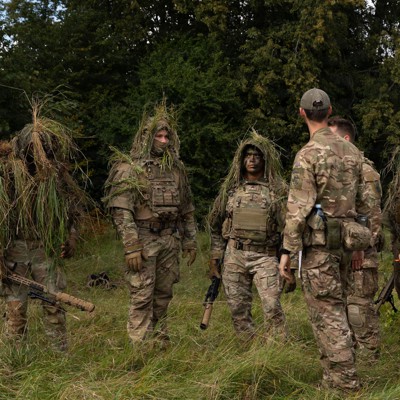
Key facts
- Polish MoD official Paweł Ksawery Zalewski said the US has decided to establish a permanent base in Poland; Pentagon said it had nothing to announce.
- Poland offers to finance base infrastructure and contribute about $15,000 per US soldier per year for their stay.
- Warsaw and Washington are nearing an agreement to expand US-Polish joint ventures for weapons development/production, constrained by US export-control rules.
3 minute read
Poland is signalling a potential inflection point in US forward posture on NATO’s eastern flank, with Paweł Ksawery Zalewski, secretary of state at Poland’s Ministry of National Defence, stating publicly that Washington has decided to establish a permanent US base in Poland. The Pentagon, however, offered no confirmation, saying only that it had “nothing to announce at this time,” leaving the status of the decision—political, programmatic, or merely aspirational—unclear.
If realised, a permanent base would be strategically consequential for European defence planning because it would institutionalise US presence in the most exposed part of NATO territory, tightening deterrence signalling against Russia while anchoring US enabling capabilities—logistics, prepositioning, command-and-control—closer to the Suwałki corridor and the Ukrainian theatre. The timing is notable: the Trump administration is described as moving to reduce US troop numbers in Europe even as Russia sustains drone and missile strikes on Ukraine and escalates hybrid activity against NATO allies. In that context, Warsaw’s message appears designed to de-risk perceptions of US retrenchment by presenting basing as aligned with a “NATO 3.0” approach and by emphasising capability over headcount.
Operational details remain unsettled. Zalewski said he could not specify troop levels and acknowledged that the administration has not yet delivered on a May promise to add 5,000 troops to Poland. He nevertheless framed negotiations as moving from whether to base to how to execute: Poland would finance infrastructure and contribute to the recurring costs of US personnel at roughly $15,000 per soldier per year. For European procurement and host-nation support planners, this cost-sharing model reinforces a broader trend in which frontline allies seek to underwrite US presence to secure permanence, potentially setting a benchmark other eastern-flank states will be asked to match.
Parallel to basing, Zalewski said Warsaw and Washington have agreed the outlines of a deal to co-develop and jointly produce new military capabilities through increased US-Polish industrial joint ventures. He flagged US defence-export laws and regulations as the main friction point, arguing for “cutting the red tape.” For Europe, this is doubly relevant: it would accelerate Poland’s emergence as a regional production hub tied into US supply chains, while also raising questions for EU defence-industrial policy, technology transfer, and the balance between US-centric interoperability and EU “strategic autonomy” goals.
Source: Defense One



