Ukraine’s counter-drone officers export lessons of “drones vs drones” war
Ukraine is exporting counter-drone expertise as an officer describes “drones fighting drones,” swarms and AI—pressuring NATO to accelerate buying, training and ops.

Key facts
- Defense One says Ukraine has sent hundreds of counter-drone experts to the Middle East to help defend against Iranian and Russian Shahed drones.
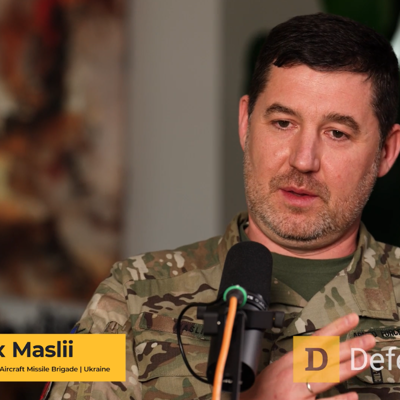
- Ukrainian Air Force Capt. Max Maslii (96th Anti-Aircraft Missile Brigade) describes the conflict as “drones fighting drones,” highlighting robot swarms and agentic AI.
- Maslii argues U.S. and NATO forces must change acquisition, training, and operational concepts to keep pace with robotic warfare.
3 minute read
Defense One reports that Ukraine has deployed hundreds of counter-drone experts to the Middle East to advise the United States, Kuwait, Qatar, Saudi Arabia, and the UAE in defending against Iranian and Russian Shahed drones. This outward flow of Ukrainian operational know-how underscores two realities relevant to Europe: the Shahed ecosystem has become a transregional threat model, and Ukraine’s counter-UAS tactics and adaptation cycles are emerging as an exportable “school” of air-defense practice.
In an interview cited by the outlet, Ukrainian Air Force Capt. Max Maslii, deputy chief of staff for the 96th Anti-Aircraft Missile Brigade, characterises the current fight as “drones fighting drones,” arguing that robotic swarms, agentic AI, and frontline-driven innovation are defining future military operations. His March visit to Washington as part of a Ukrainian defense forces delegation is framed as an attempt to compress Western learning timelines: Maslii’s central message is that U.S. and NATO forces must change how they buy equipment, train personnel, and conduct operations to match the tempo of robotic warfare.
For European procurement officers, the implied requirement is not simply more interceptors or more sensors, but procurement governance capable of frequent configuration changes, rapid fielding, and continuous software-led upgrades—conditions that traditional multi-year programs struggle to accommodate. For European aerospace and defense executives, the signal is that counter-UAS competitiveness will increasingly be measured by iteration speed, integration with operational users, and the ability to scale affordable effects against massed one-way attack drones and smaller ISR platforms. The broader European implication is that counter-drone capability must be treated as a foundational layer across homeland defense, deployed basing, critical infrastructure protection, and frontline maneuver—rather than a specialised adjunct—because adversaries can now reproduce low-cost aerial mass at industrial scale and adapt tactics quickly.
Source: Defense One