Zelensky–Fedorov Rift Tests Ukraine’s Drone-First War Model
Ukraine’s firing of defence minister Mykhailo Fedorov and the ensuing protests expose a fault line over procurement reform and a drone-first war model with direct implications for European aid and industry.

Key facts
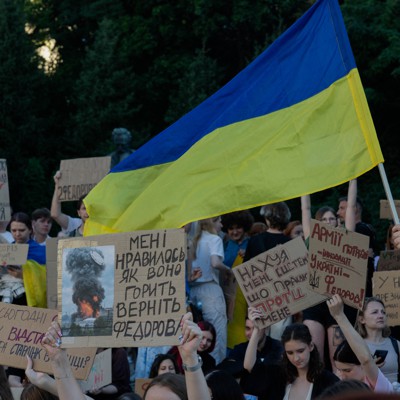
- Protests reportedly continued for ten days after Zelensky fired defence minister Mykhailo Fedorov on 15 July; Fedorov says he will accept only the defence minister post to fight procurement corruption.
- Zelensky appointed Maj. Gen. Yevhenii Khmara as acting defence minister and replaced commander-in-chief Gen. Oleksandr Syrskyi with Maj. Gen. Mykhailo Drapatyi.
- Fedorov is credited in the source with expanding Ukraine’s defence-tech ecosystem via Army of Drones, Brave1, procurement digitisation, and reforms including 25% profit margins for drone manufacturers.
3 minute read
The removal of Mykhailo Fedorov from Ukraine’s defence ministry has rapidly become a stress test of wartime governance and the credibility of Kyiv’s anti-corruption narrative. Protests reportedly continued for a tenth day, with Fedorov refusing alternative roles and framing his dismissal as a setback to procurement integrity. A cited poll indicates broad public disapproval of his forced removal and a sharp rise in perceived trustworthiness, underscoring that the dispute is being interpreted domestically less as a personality clash than as a referendum on reform momentum under martial law.
On 15 July Zelensky fired Fedorov, described as his third defence minister, amid feuding with then commander-in-chief Gen. Oleksandr Syrskyi. The subsequent rapid personnel sequence—an initial offer to Interior Minister Ihor Klymenko, followed by the appointment of Maj. Gen. Yevhenii Khmara as acting defence minister, and the replacement of Syrskyi by Maj. Gen. Mykhailo Drapatyi—signals an attempt to stabilise the chain of command. However, the controversy described in the source stems from the process and the underlying institutional boundary dispute: whether a defence minister’s remit should remain confined to civilian oversight and resourcing, or extend to challenging operational paradigms and reshaping capability priorities.
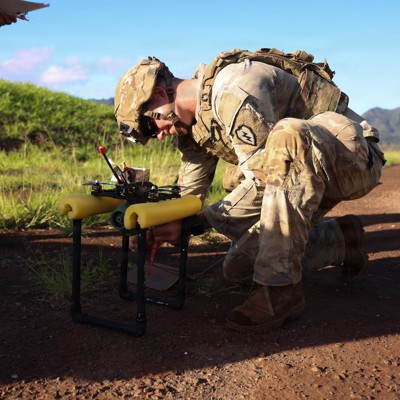
Fedorov’s record, as characterised here, is tightly linked to Ukraine’s wartime defence-tech ecosystem: digitisation initiatives that supported state continuity after 2022, transparency tools for acquisition, the “Army of Drones” procurement programme, the Brave1 coordination platform, a profit-cap reform enabling 25% margins for drone manufacturers, and direct engagement with Western technology firms. The text also credits him with securing Starlink connectivity and pushing AI-enabled battlefield coordination tools such as Delta, while noting he allegedly redirected funding away from conventional munitions and personnel towards a more “roboticised” approach—moves that drew resistance from Syrskyi and accusations of overreach.
For Europe, the immediate implication is procurement and industrial-policy risk: a leadership reset could slow contracting, payments, or programme governance for drones, UGVs, C2 and ISR software—areas where European suppliers and investors increasingly interface with Ukrainian partners. Strategically, the rift also touches EU conditionality. If public trust is indeed central to mobilisation and to donor confidence, a visible struggle over corruption controls at the MoD can either reinforce reform credentials (if resolved transparently) or weaken them (if perceived as factional capture). European defence officials should treat this as an indicator of execution risk in Ukraine’s high-tempo innovation pipeline, not merely an internal political drama.
Source: Defense One